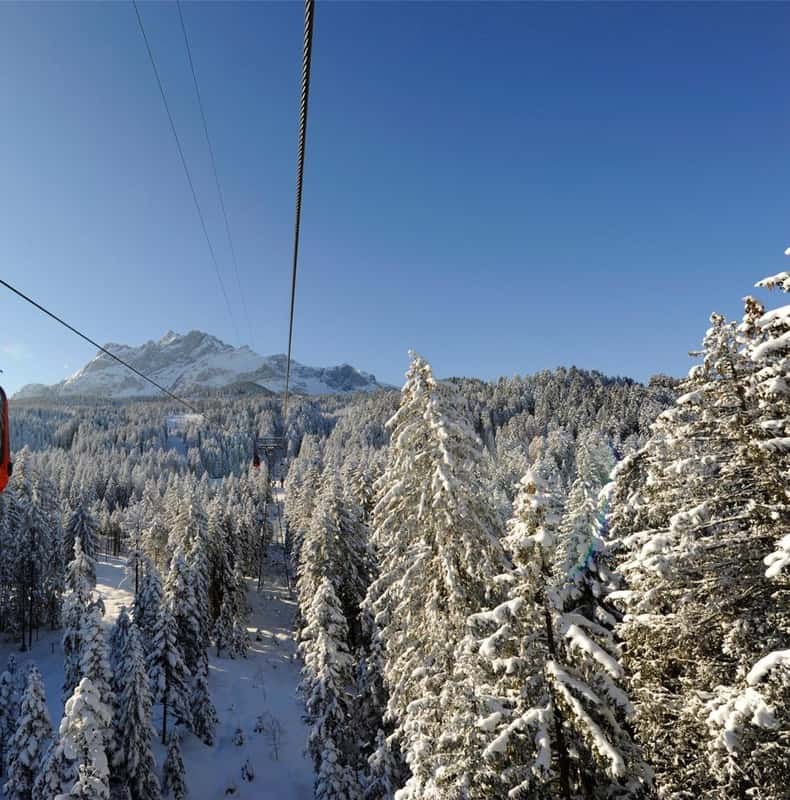
Kriens: Mt. Pilatus by Panoramic Gondola and Aerial Cableway
The cheapest way up: the panorama gondola and the cableway from Kriens to the summit and back, on the side that runs all year outside its overhaul.
From $72 per person
Check AvailabilityIn summer the summit of Mount Pilatus is about ten degrees colder than Lucerne, and in autumn it often sits in sun when the city is grey. Before you book a Mount Pilatus guided tours, read the month you travel in, because the weather and the season both change the day.
Cloud is the thing that spoils a day, not the cold. The lifts carry you up in cloud, but at the top the view can be gone for an hour or all day. Travellers who went up in thick cloud still enjoyed the ride, and some came down to a clear lake.
Autumn works the other way. MeteoSwiss describes fog over the Swiss lowlands from mid-September to March, trapped under warmer air with clear sky above it. Pilatus stands above that layer. In December the summit station records about 103 hours of sun, against 39 in Lucerne. You can leave a grey city and step out into sunshine.
Wind and storms close things too. The rope park and the Dragon Glider shut without notice in strong wind, rain or thunder. Pilatus-Bahnen posts the day's open facilities on its site, so check them the morning you go.
The figures below come from MeteoSwiss's station on Pilatus, at 2,105 metres, averaged over 1991 to 2020. The comparison with Lucerne uses MeteoSwiss's Lucerne station over the same years.
Mean −3.8 °C at the summit station, about 120 hours of sun and 194 mm of rain or snow. Frost on about 29 days. Only the Kriens side runs, so you go up and down by gondola and cableway. The sledging runs open once Krienseregg has 20 cm of snow.
Mean −4.4 °C at the summit station, about 127 hours of sun and 192 mm of rain or snow. Frost on about 26 days. The coldest month at the top. The cogwheel is closed, so go up from Kriens, and dress for wind on the terrace as well as the cold.
Mean −2.5 °C at the summit station, about 150 hours of sun and 178 mm of rain or snow. Frost on about 26 days. Still winter at the top, with snow on every path. In 2026 the Kriens lifts closed for maintenance on 30 and 31 March.
Mean 0.1 °C at the summit station, about 151 hours of sun and 190 mm of rain or snow. Frost on about 21 days. Little changes at the summit, where snow lies on the peaks. Lower down the rope park opens on 25 April, and the toboggan run in good weather.
Mean 4 °C at the summit station, about 147 hours of sun and 158 mm of rain or snow. Frost on about 12 days. The cogwheel opens on 11 May, and the boat to Alpnachstad returns, so the whole loop runs again. Snow can still close the higher paths.
Mean 7.5 °C at the summit station, about 142 hours of sun and 168 mm of rain or snow. Frost on about 4 days. Summit hikes are recommended from mid-June, once the snow has gone. The flower trail to the Tomlishorn opens this month.
Mean 9.5 °C at the summit station, about 157 hours of sun and 165 mm of rain or snow. Frost on about 1 day. Nearly frost-free at the top. The whole loop runs, and fine weekends are the busiest days on the cogwheel, so reserve a seat.
Mean 9.8 °C at the summit station, about 160 hours of sun and 167 mm of rain or snow. Frost on about 1 day. The warmest month at the summit, and the sunniest. Reserve a cogwheel seat for fine days, and go up early to have the morning at the top.
Mean 6.5 °C at the summit station, about 149 hours of sun and 115 mm of rain or snow. Frost on about 6 days. Rain falls away after August. Fog starts to gather over the lowlands, often with sun above it, and the whole loop still runs.
Mean 4 °C at the summit station, about 154 hours of sun and 105 mm of rain or snow. Frost on about 11 days. The driest month at the summit. The boat stops on 18 October, and the Kriens lifts close on the 19th for six weeks.
Mean −0.3 °C at the summit station, about 112 hours of sun and 154 mm of rain or snow. Frost on about 21 days. Only the cogwheel runs until 27 November, from Alpnachstad, up and back down. It closes after the 29th, when the Kriens side reopens.
Mean −2.9 °C at the summit station, about 103 hours of sun and 206 mm of rain or snow. Frost on about 27 days. The wettest month, and a grey one in Lucerne under the fog. The Kriens side runs, and the summit often sits in sun.
Pick late summer or early autumn if you can. From September to mid-October you get the whole loop, the driest weeks at the summit, and the first sunny days above the fog. Pick July or August for the warmest days and the flower trail to the Tomlishorn. Pick winter for snow and sun above a grey Lucerne, and go up from Kriens.
| Season | At the summit | What runs in 2026 | Best for |
|---|---|---|---|
| Winter, December to April | Mean −3.8 to −2.5 °C | Kriens side only | Snow play and sun above the fog |
| Late spring, May and June | Mean 4 to 7.5 °C | Everything from 11 May | The first loops, snow on the peaks |
| Summer, July and August | Mean 9.5 to 9.8 °C | Everything | The warmest days and the flower trail |
| Autumn, September and October | Mean 6.5 to 4 °C | Everything to 18 October | The driest weeks, and sun above the fog |
| November | Mean −0.3 °C | Cogwheel only to 27 November | Quiet days, if you check the lifts |
Two weeks need care. From 19 October to 27 November only the cogwheel runs, and from 30 November only the Kriens side. The dates are on the seasonal schedule.
The guided half-day from Lucerne still includes the boat until 18 October 2026, and refunds in full up to 24 hours ahead if the forecast turns.
Go up early. The first gondola leaves Kriens at 08:30, and in summer the cogwheel runs from Alpnachstad from 08:10 until 24 October. The morning is quieter, and you have the whole day if cloud comes and goes. Travellers who started early say so too.
At the top, climb the Oberhaupt first while it is clear, then walk the Dragon Path and eat. If the summit is in cloud when you arrive, have lunch and look again later. For sunrise, the railway runs an early ride with breakfast at the top on set dates.
The cheapest way up: the panorama gondola and the cableway from Kriens to the summit and back, on the side that runs all year outside its overhaul.
From $72 per person
Check Availability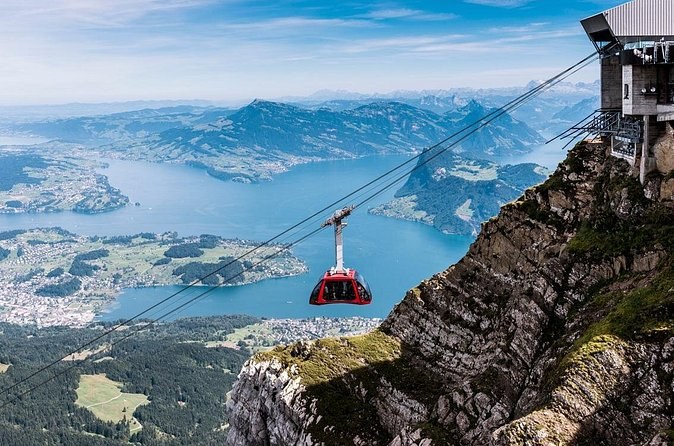
The whole loop from Lucerne on one ticket, boat in second class, going either way round. Unguided; book a cogwheel seat to avoid a wait.
From $147 per person
Check Availability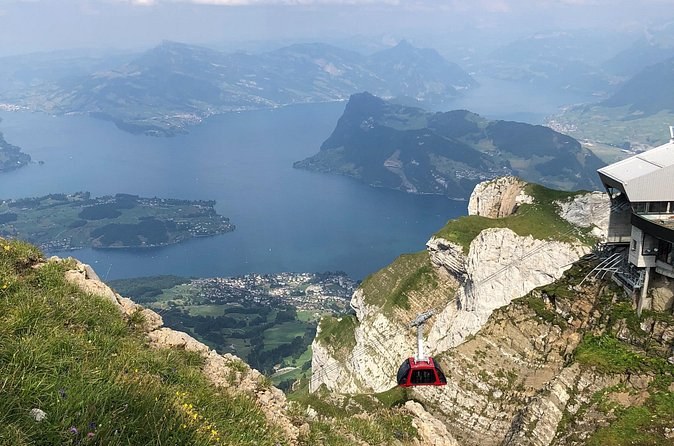
A private guide meets you at your Lucerne hotel for the loop, first-class on the lake, and about three and a half hours on the mountain. For up to 7.
From $693 per person
Check AvailabilityNext: plan the day on the visitor guide, see what is at the top on things to do on Pilatus, or compare every tour on Mount Pilatus Tours.