The Mount Pilatus Cogwheel Railway: How the 48% Climb Works
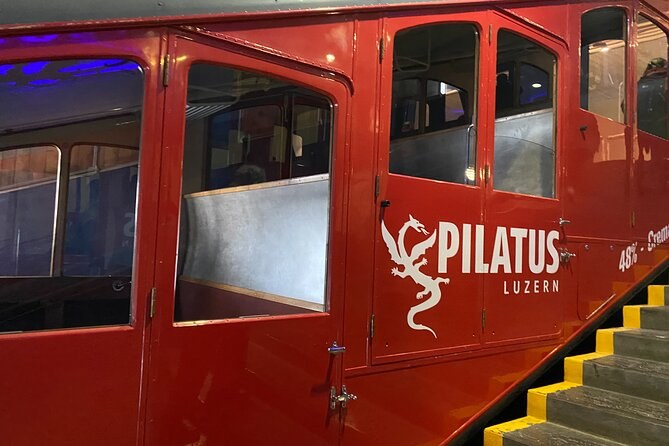
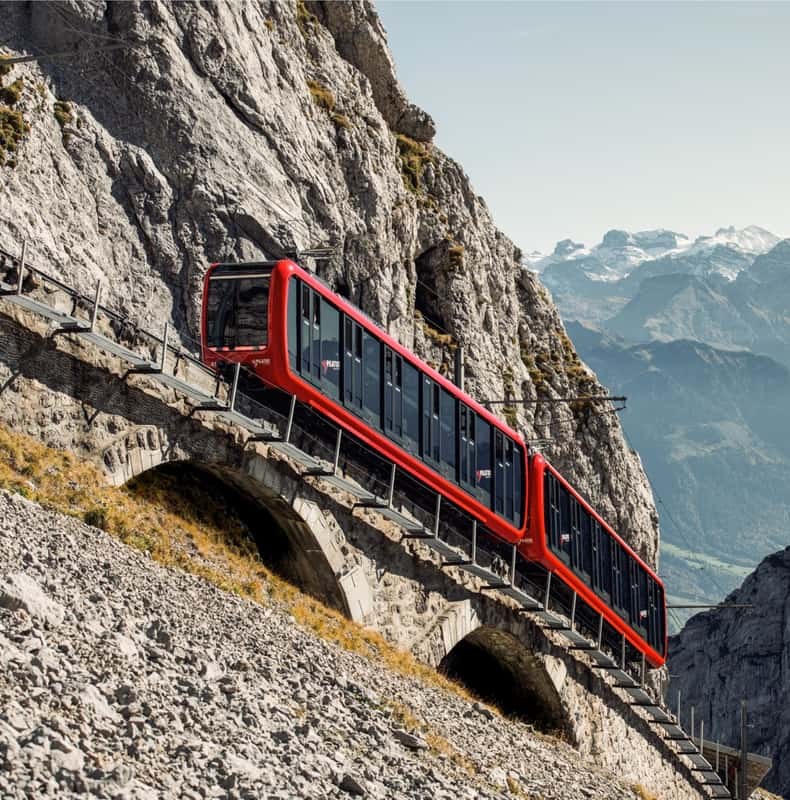
The short answer. The Pilatus Railway climbs from Alpnachstad, on the lake, to Pilatus Kulm at up to 48 per cent, the steepest cogwheel railway in the world. It opened on 4 June 1889, went electric in 1937 and got new railcars in 2023. The ride takes 27 minutes up and 33 down, and in 2026 it runs from 11 May to 29 November. A seat reservation is recommended, not obligatory.
The rack railways of the 1870s topped out at about 25 per cent. The first plan for a line up Pilatus, in 1873, stopped there too, and the company concluded it would not pay. What made the mountain possible was an engineer who turned the cogwheel on its side. If you would rather ride it with someone explaining the rest of the mountain, Mount Pilatus guided tours put the railway into a half-day from Lucerne. If you are riding it on your own, here is what you are sitting on.
| The railway in figures | Pilatus-Bahnen's own data |
|---|---|
| Route | Alpnachstad to Pilatus Kulm |
| Opened | 4 June 1889, by steam |
| Electric since | 15 May 1937 |
| New railcars | 5 June 2023 |
| Length and climb | 4,618 m of track, 1,635 m of height |
| Gradient | 48% at the steepest, 38% on average |
| Journey | 27 minutes up, 33 minutes down |
| Fleet | 8 railcars of 46 seats |
| Top speed | 15 km/h up; 9 km/h down on the steepest sections |
Why a normal rack could not do it
A conventional rack railway presses one cogwheel down onto a toothed rail between the tracks. On a very steep grade that wheel can ride up and jump out of the rack, and the car loses its drive and its brakes in the same moment. Eduard Locher's answer was a double rack laid flat, with teeth facing left and right, gripped by two horizontal cogwheels under the car. The wheels cannot climb out, and the grip also stops a car from tipping in the strong crosswinds the mountain is known for.
The system has a side effect you can see from the window: there are no ordinary points anywhere on the line. Railcars change tracks on turntable-style switches and traversers. The original rack rails have been in place for well over a century; when the teeth wear, the rails are turned over to give a fresh face.
How it was built
- 1886: work starts in the valley, and the line is built upward section by section.
- Three summers: about 400 working days, with some 600 labourers, most of them Italian.
- 17 August 1888: the first passenger run takes the company's board to the top.
- 4 June 1889: the line opens to the public. Steam railcar number 7 goes on show at the Paris World's Fair the same year.
- 1901: a million people have ridden it, after 35,000 in the first year.
No government money went into it. Locher's company built the railway with private capital, and it has paid its way ever since. In 2001 the American Society of Mechanical Engineers named it a Historic Mechanical Engineering Landmark.
From steam to electric, and the railcars of 2023
By 1937 the railway ran eleven steam railcars, and the trip to the top took 70 to 80 minutes. Plans to electrify dated back to 1905 but were shelved on cost; the work finally went ahead in the 1930s, and electric railcars took over on 15 May 1937. Two of the steam cars survive: one at the Swiss Museum of Transport in Lucerne, one at the Deutsches Museum in Munich.
After the railway's 125th anniversary, Pilatus-Bahnen spent about CHF 55 million on eight new passenger railcars from Stadler, a new freight railcar, three custom-made turnouts at Alpnachstad and a second platform there. The new fleet carried its first passengers on 5 June 2023. The dragon on the side of the red railcars comes from the legends told in the dragons of Mount Pilatus.
Riding it: timetable, seats and which way round
In 2026 the railcars leave Alpnachstad every 35 minutes: from 08:45 until mid-afternoon all season, and from 08:10 until early evening between 11 May and 24 October. There is one stop on the way, Ämsigen, where you can board on request if there is room; it is not suitable for wheelchairs. The line runs from 11 May to 29 November 2026 and never in winter.
Direction matters more than it looks. The railway's own loop ticket runs either way round, and travellers who have ridden it advise taking the boat to Alpnachstad first and reserving a cogwheel seat that meets it. The guided half-days do the opposite: the Best of Switzerland half-day from Lucerne goes up by gondola and cableway and rides the cogwheel down, 33 minutes of looking at the lake below you.
| How you ride it | Up or down | Price per person |
|---|---|---|
| The railway's loop ticket, boat first | Up | $144 |
| The loop by train instead of boat | Either | $113 |
| Return from Alpnachstad only | Up and down | $101 |
| Guided half-day from Lucerne | Down | $197 |
| Guided day from Zurich | Down | $207 |
What you see from the window
From Alpnachstad the line climbs through forest and alpine meadow, then onto bare rock below the summit, where the track is fixed straight to the stone without ballast. The last stretch runs up to the station below the Esel, one of the peaks you can climb in about half an hour from the top.
When it does not run
The cogwheel is a summer railway. From 30 November the only way up is from Kriens, by the panorama gondolas and the Dragon Ride cableway. In 2026 the Kriens side is itself shut from 19 October to 27 November for its overhaul, so for those weeks the cogwheel is the only way to the top, and the boat to Alpnachstad stops after 18 October. The seasonal schedule lays the dates side by side, and how to get there covers the train to Alpnachstad, under 20 minutes from Lucerne.
Where these facts come from
- Pilatus-Bahnen: the cogwheel railway
- Pilatus-Bahnen: timetable 2026, closures and boat and train connections
- Pilatus-Bahnen: travel preparation FAQ (reservations, boats and the round trips)
- Pilatus-Bahnen: accessibility at the mountain
- Wikipedia: Pilatus Railway
- Wikipedia (German): Pilatusbahn, construction and the steam railcars
Ways to ride the cogwheel
From Alpnachstad or Kriens: Mount Pilatus Roundtrip Ticket
A return up and down one side: the cogwheel from Alpnachstad, or the gondola and cableway from Kriens. Your own pace, no guide.
From $101 per person
Check Availability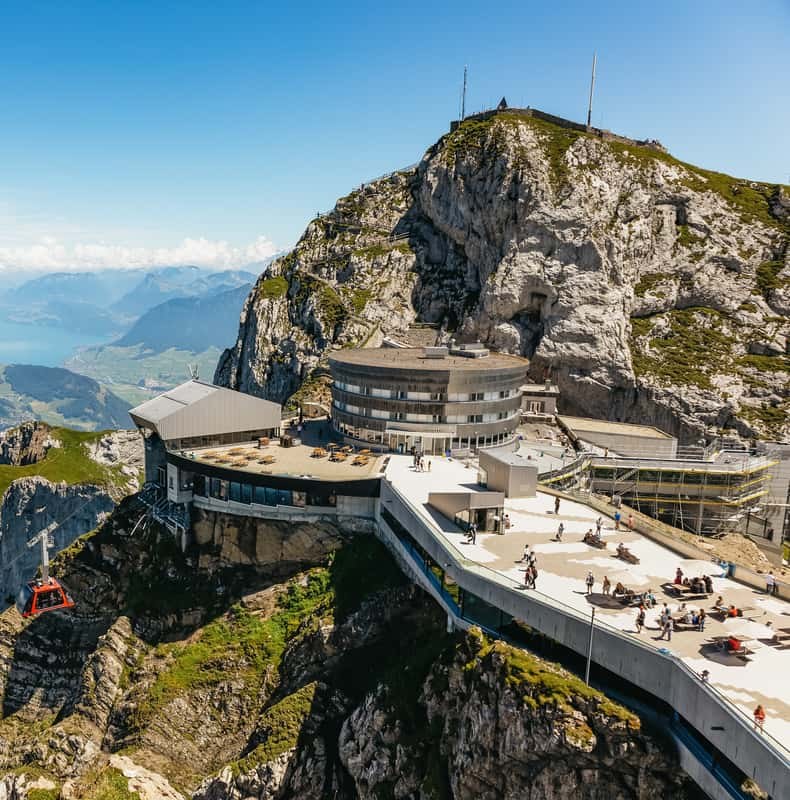
Lucerne: Mt. Pilatus Cable Car, Cogwheel Train & Lake Cruise
A guide rides the gondola, cableway, cogwheel and boat with you from Lucerne, with about 90 minutes of free time on the summit. A lunch voucher replaces the boat after 18 October 2026.
From $197 per person
Check Availability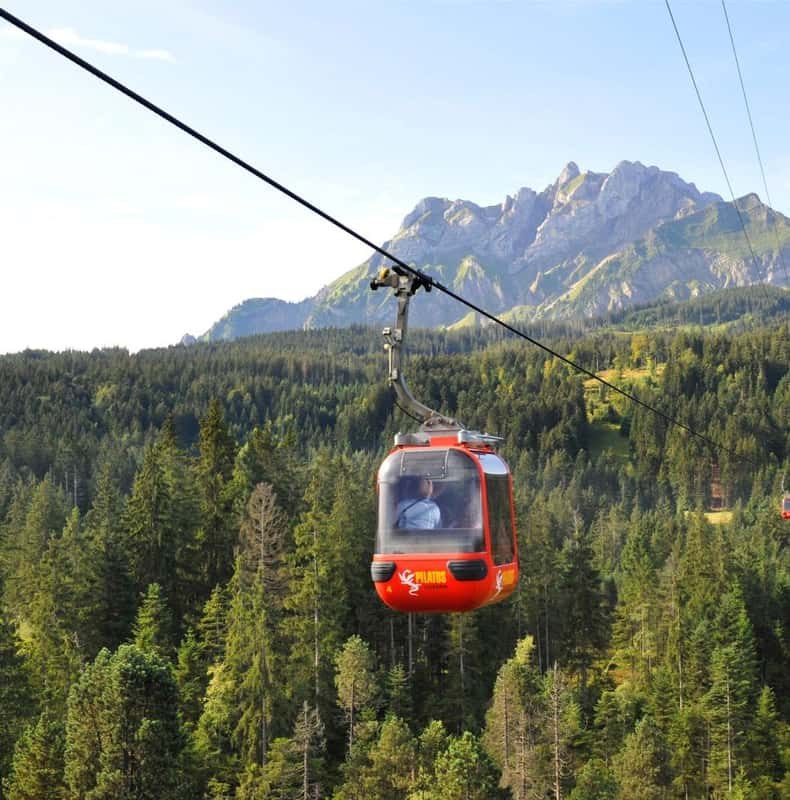
Lucerne: Self-Guided Round-Trip Train to Mount Pilatus
The loop with the train to Alpnachstad instead of the boat, so it does not depend on the sailing times. Bus, gondola, cableway and cogwheel included; no guide.
From $113 per person
Check AvailabilityNext: see what waits at the top in Mount Pilatus hikes. Every guided day, private day and railway ticket up the mountain sits side by side on Mount Pilatus Tours.